
Thyroid Health and Diagnosis of Thyroid Problems Through Blood Testing
The thyroid gland is located in the front of the neck, situated along the trachea. It is a butterfly-shaped gland, made up of two lobes, which are joined together by a band of tissue. Its main function is to regulate metabolism so food is broken down and converted into energy. The thyroid gland does this by taking iodine from the blood and converting it into thyroid hormones, known as tri-iodothyronine (T3) and thyroxin (T4) hormones. The thyroid gland’s hormonal output is controlled by the pituitary and hypothalamus glands. When thyroid hormone levels drop, the hypothalamus gland produces thyrotrophic-releasing hormone (TRH), which signals the pituitary gland to begin producing thyroid-stimulating hormone (TSH). This hormone then stimulates the thyroid gland to produce more T3 and T4 hormones. When the thyroid gland is functioning properly, it produces about 20 percent T3 hormone and 80 percent T4 hormone. Although it produces a significant amount more T4 hormone than T3, T3 is four times more potent than T4. The thyroid gland also produces calcitonin. This hormone works to control calcium levels in the blood.
Disorders of the Thyroid Gland
The thyroid gland can be affected by a number of different disorders, which can be brought on by disease such as thyroid cancer, dietary deficiencies or an injury to the thyroid. The most common thyroid disorders occur when the thyroid begins to produce too much thyroid hormone (hyperthyroidism) or not enough thyroid hormone (hypothyroidism).
Hyperthyroidism - If the thyroid gland begins to overproduce T4 or thyroxin hormone, the condition is known as hyperthyroidism. This can cause the metabolism to speed up significantly resulting in nervousness, irritability, sweating, irregular or rapid heartbeat and sudden weight loss. Other symptoms may include increased appetite, trembling of the hands, frequent bowel movements, fatigue, difficulty sleeping, muscle weakness and increased heat sensitivity. The thyroid gland may also enlarge (goiter), making it visible as a swelling in the neck. Hyperthyroidism can occur from several different disorders. Graves’s disease is an autoimmune disorder that causes antibodies to mistakenly attack the thyroid gland causing the gland to overproduce T4 hormone. Thyroiditis or inflammation of the thyroid can cause stored T4 hormones to be released into the bloodstream. Thyroid nodules can form on the gland causing the thyroid to enlarge and produce too much T4 hormone.
Hypothyroidism - Hypothyroidism can occur if TSH levels are high although T3 and T4 levels are within normal range. This is known as subclinical hypothyroidism. Primary hypothyroidism occurs when TSH levels are high and T3 and T4 levels are low. Women over the age of 50 are especially prone to this disorder, which can cause chemical reactions within the body to become unbalanced. During early stages of hypothyroidism, symptoms may not be noticed, however, as metabolism slows down, more symptoms may develop, which could include fatigue, dry and pale skin, increased sensitivity to cold, puffy face, weight gain, hoarse voice, muscle aches and stiffness, swelling and painful joints, constipation, depression and brittle hair and fingernails. The most common cause of hypothyroidism is the autoimmune disease known as Hashimoto’s thyroiditis, which causes antibodies to attack the thyroid tissues.
Blood Tests Use For Diagnosing Thyroid Conditions
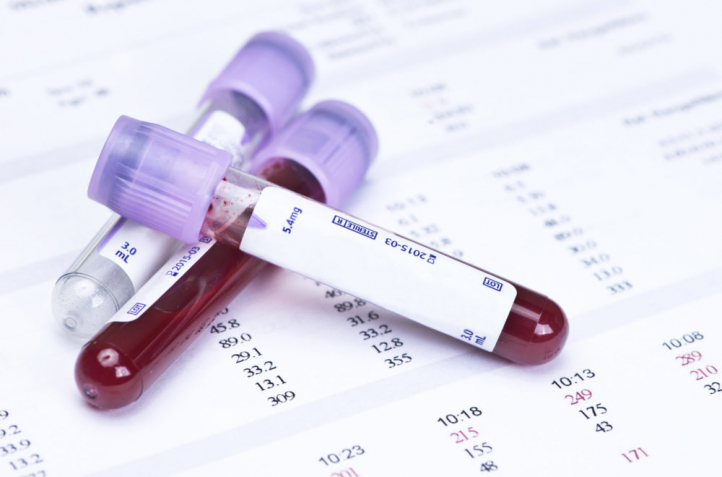
Diagnosing thyroid problems usually consist of a clinical evaluation and a serious of blood tests, which can determine thyroid hormonal levels in the blood. These tests consist of the following:
TSH Blood Test - The most common thyroid blood test is the thyrotrophic-stimulating hormone (TSH) test. If test results show an elevation in TSH levels above 3.0, this points to hypothyroidism. If the test results show that TSH levels are below normal or less than 3.0, this suggests hyperthyroidism.
Free T4 Test - T4 hormone is the hormone that is immediately available for use by the cells. The free T4 test measures the amount of free thyroxin that is in the bloodstream. If results show T4 levels are elevated, this represents hyperthyroidism, whereas if levels are lower than normal, this indicates hypothyroidism.
Total T4 Blood Test - The total T4 test is done to measure the total amount of T4 that is circulating in the bloodstream. Test results showing higher than normal levels can indicate hyperthyroidism whereas lower than normal levels can suggest hypothyroidism. There are also certain factors that can raise T4 total levels. These include pregnancy, birth control pills and estrogen replacement.
Free T3 Test - This blood test measures the amount of free T3 levels in the bloodstream and is considered a more accurate test than the Total T3 test. If results show that the patient has an elevated amount of T3 in their blood, this is indicative of hyperthyroidism. If levels are low, this suggests hypothyroidism.
Total T3 Test - Like the Total T4 test, the Total T3 test measures the total amount T3 in the bloodstream. Elevated results suggest hyperthyroidism and low-level results suggest hypothyroidism.
Treating Thyroid Disorders
Depending on the type of thyroid disorder, treatments will vary. Hypothyroidism is usually treated with replacement hormones whereas hyperthyroidism may be treated using anti-thyroid medications, radioactive iodine or surgical removal of the thyroid.
Keeping The Thyroid Healthy
Although hypothyroidism or hyperthyroidism cannot be prevented, to help keep the thyroid healthy, the thyroid should be shielded during dental x-rays and unnecessary CT scans of the neck and head should be avoided as radiation exposure can cause thyroid nodules to form. Because iodine deficiency is very rare, it is not recommended to take extra iodine, but instead use a multiple vitamin that contains iodine.